
Where I'd start
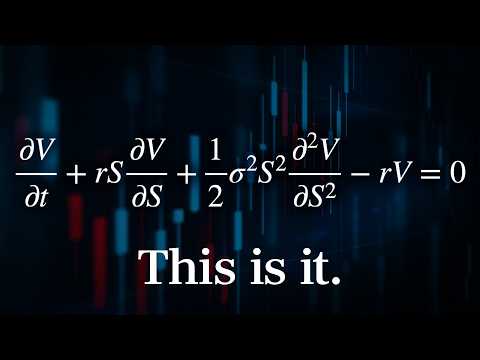 The Equation That Beat Wall StreetHow option pricing went from guesswork to the Black-Scholes-Merton equation, from Bachelier's random walk and Einstein's Brownian motion to Ed Thorpe and dynamic hedging. It ends with Jim Simons' Medallion Fund as a challenge to efficient markets. Key ideas: options as leverage and hedges, prediction changing the price, and derivatives amplifying both stability and crashes.
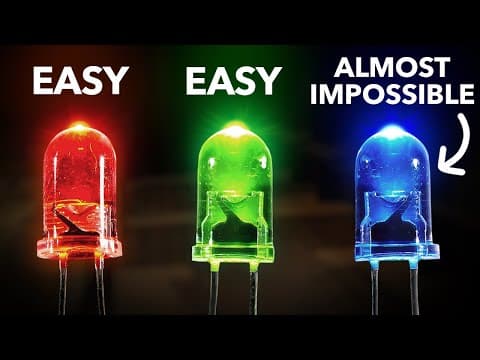 Why It Was Almost Impossible to Make the Blue LEDShuji Nakamura, a lone engineer at a small firm, beat much bigger companies to the blue LED by betting on gallium nitride, rebuilding his reactor by hand, and discovering that annealing made p-type material work. Key ideas: band gap sets LED color, hidden hydrogen blocked p-type doping, and the inventor got a $170 bonus from a roughly $80 billion industry.
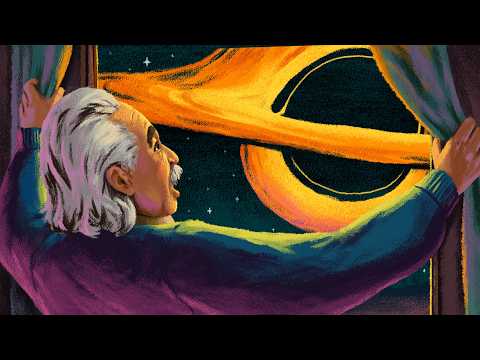 Something Strange Happens When You Follow Einstein's MathFollows Einstein's field equations from Schwarzschild's black hole solution to white holes and wormholes, using light cones and Penrose diagrams. Key ideas: a coordinate choice can look like physical reality, the singularity is a moment in time and not a place, and a solution that the math allows is not the same as one that physics makes.
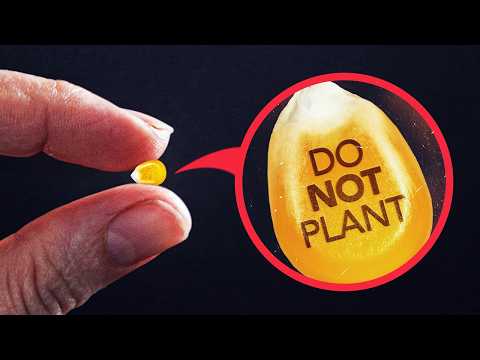 Why Farmers Can't Legally Replant Their Own SeedsA history of Monsanto, from dioxin-contaminated herbicides to Roundup and engineered seeds sold under contracts that ban saving seeds. It follows the lawsuits against farmers, the Monsanto Papers, and the sale to Bayer. Key ideas: pairing a chemical with resistant seeds locked in a monopoly, industry-funded science and regulatory influence, and weeds evolving resistance that undermines the product.
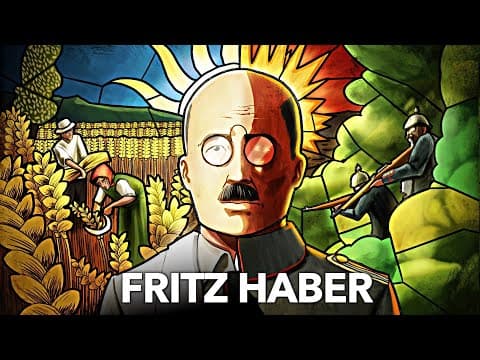 The Man Who Killed Millions and Saved BillionsFollows Fritz Haber, who solved how to turn nitrogen from the air into ammonia after guano supplies ran out and a chemist warned of mass starvation. The process now supports about 4 billion more people, but the same chemistry fed German explosives in World War I, and Haber ran the first major chlorine gas attack. Key ideas: nitrogen's triple bond is hard to break and releases huge energy when it re-forms, fertilizer and explosives share chemistry, and knowledge is double-edged.